
Annual Insurance Review: 10 Things Every Family Should Check Before Renewal
Renewal day often looks simple.
You receive a message.
You pay the premium.
Your policy continues.
But renewal is actually one of the best opportunities to review whether your insurance still makes sense.
Your family may have changed.
Your income may have changed.
Your responsibilities may have changed.
And your insurance should reflect those changes.
Here are 10 things worth reviewing before renewing your insurance.
1. Check Who Is Actually Covered
Start with the basics.
Review every insured person.
Has your family changed since you bought the policy?
Marriage, children, dependent parents and other life changes can alter your protection requirements.
2. Review Your Sum Insured
Look at your current health insurance coverage.
Ask whether the sum insured still appears appropriate considering:
- Family size
- Age
- Healthcare needs
- Income
- Existing savings
- Employer coverage
Don’t increase coverage simply because a bigger number sounds safer.
Review the underlying risk first.
You can use the UNC Health Coverage Check as a starting point.
3. Review Waiting Periods
Understand which conditions and treatments are subject to waiting periods.
This is particularly important if your health circumstances have changed.
UNC explains this in detail in its guide to health insurance waiting periods.
4. Review Exclusions
Read the exclusions again.
Something that seemed unimportant when you first bought the policy may become relevant later.
UNC’s guide to common health insurance exclusions can help you understand some of the areas that deserve attention.
5. Check Network Hospitals
If you have moved from Delhi to Gurgaon, Noida or another city, check whether the hospitals you are likely to use remain within the insurer’s network.
Never assume the network remains unchanged forever.
Verify current information with the insurer.
6. Understand Your Claim Process
Do you know what you would actually do if you needed hospitalisation tomorrow?
Review:
- Cashless process
- Reimbursement process
- Claim notification
- Required documents
- Insurer contact details
- TPA details, where applicable
Read UNC’s Cashless vs Reimbursement Claims guide for a refresher.
7. Review Your Parents’ Coverage
If your parents depend on you financially, don’t treat their health insurance as an afterthought.
Age, health conditions, premiums and policy structures can significantly influence their insurance requirements.
Review their coverage separately where necessary.
8. Review Employer Insurance
If you receive health insurance through your employer, understand:
- Sum insured
- Family coverage
- Who is included
- What happens after leaving the company
- Whether you have personal health insurance
Employer insurance can be valuable, but it shouldn’t automatically be treated as your entire protection plan.
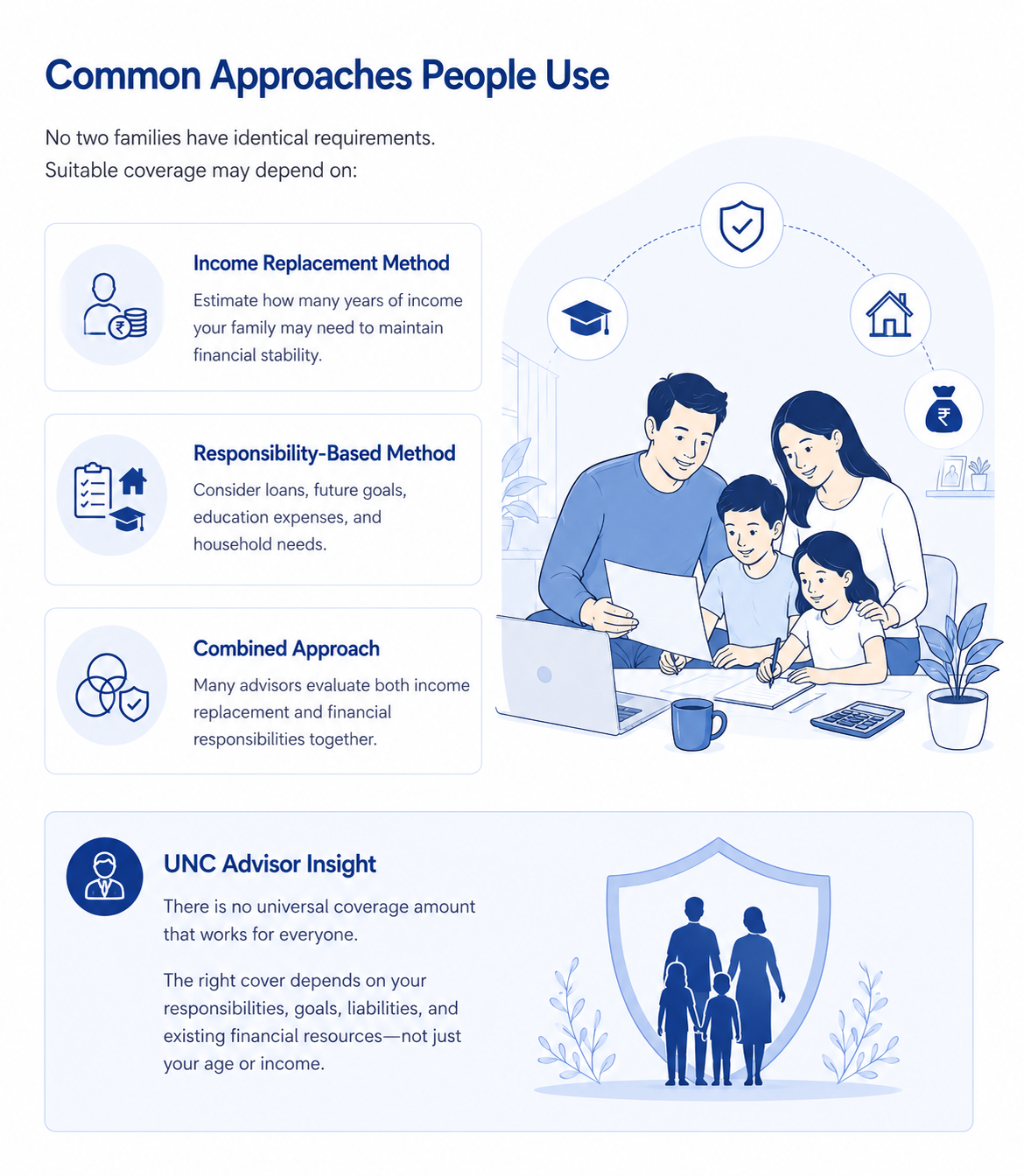
9. Check Whether Your Life Insurance Still Makes Sense
Your life insurance requirement can change after:
- Marriage
- Children
- Home loans
- Business loans
- Increased income
- Increased family responsibilities
If your financial responsibilities have increased significantly, your existing life insurance may need to be reviewed.
10. Don’t Automatically Renew Without Understanding the Policy
Renewal is not just a payment event.
It is a review opportunity.
You don’t necessarily need to change insurers every year.
You don’t necessarily need a larger policy every year.
But you should understand what you currently have.
Use UNC’s Planning Tools
UNC Insurance is building insurance planning around practical decision-making rather than simply selling policies.
You can use tools such as:
Health Coverage Check
Review the factors that influence whether your health insurance protection may be adequate.
Hospital Expense Planner
Think through potential healthcare expenses and your financial exposure.
These tools are starting points—not substitutes for reading the policy wording or taking professional advice.
Insurance Should Evolve With Your Life
Your first health insurance policy may have been purchased when you were single.
A few years later, you may have:
- A spouse
- Children
- Parents depending on you
- A home loan
- A growing business
- Higher income
- Greater financial responsibilities
Your insurance should evolve accordingly.
The purpose of an annual review isn’t to buy more insurance.
It is to make sure the insurance you already have still makes sense.
How UNC Insurance Can Help
Insurance can become complicated when you’re comparing policies, exclusions, premiums, claims and coverage at the same time.
UNC Insurance takes a human-led approach to helping individuals and families understand their protection requirements.
From health insurance and life insurance to claims guidance and protection planning, the focus is on helping you make an informed decision.
If your insurance hasn’t been reviewed recently, start with your existing policies.
Then use the UNC Health Coverage Check or speak with a UNC Insurance advisor.
Frequently Asked Questions
How often should I review my insurance?
At minimum, review it when your policy is due for renewal and whenever there is a major change in your financial or family circumstances.
Should I change my health insurance every year?
Not necessarily. A policy shouldn’t be changed simply for the sake of changing it. Review whether your existing protection remains suitable first.
What should I check before health insurance renewal?
Review coverage, waiting periods, exclusions, room-rent limits, co-payment, network hospitals, claim procedures and your overall protection requirement.
Should I have health insurance if my employer provides it?
Personal health insurance can provide additional independence from employer-provided coverage, depending on your circumstances.
Can UNC help me review my insurance?
UNC Insurance provides insurance guidance and can help you understand your protection requirements and available options.