
What Does Pet Insurance Actually Cover?
Pet insurance is designed to help pet owners manage the financial impact of unexpected veterinary expenses. While coverage varies between insurers and policy types, most pet insurance plans provide financial protection for eligible medical treatments resulting from accidents, illnesses, injuries, and emergency care.
As veterinary healthcare continues to advance, treatments such as diagnostic imaging, surgeries, hospitalization, and specialist care have become more accessible—but also more expensive. A comprehensive pet insurance policy can help reduce out-of-pocket costs and ensure that treatment decisions are based on your pet’s medical needs rather than financial constraints.
Depending on the policy, pet insurance may include coverage for:
1.Veterinary consultations and specialist visits
2.Accidental injuries and emergency treatment
3.Illness-related medical care
4.Hospitalization and surgical procedures
5.Diagnostic tests, X-rays, and laboratory investigations
6.Prescription medications and eligible treatment costs
7.Follow-up care and recovery, where covered by the policy
What Is Commonly Covered
Coverage varies between insurers, but many pet insurance plans are designed to help manage unexpected veterinary expenses arising from accidents, illnesses, hospitalization, and medically necessary treatments.
Accident Treatment
Coverage for eligible injuries caused by accidents, falls, fractures, bite wounds, and similar unexpected incidents requiring veterinary care.
Illness Treatment
Financial support for eligible illnesses, infections, and medical conditions covered under the policy terms.
Hospitalization
Veterinary hospitalization expenses, observation, intensive care, and related treatment costs, subject to policy conditions.
Surgery Costs
Coverage for medically necessary surgeries and associated veterinary procedures arising from eligible accidents or illnesses.
Diagnostic Testing
Blood tests, X-rays, scans, laboratory investigations, and other diagnostic procedures required for treatment evaluation.
Third-Party Liability
Selected plans may provide liability protection where legally applicable for accidental damage or injury caused by an insured pet.
Theft or Loss Protection
Certain insurers offer additional benefits for theft, permanent loss, or related incidents, depending on the policy selected and its coverage conditions.
Insurance made simple. Expert advice, tailored to your needs.
Book a free consultation or chat on WhatsApp with a UNC Insurance advisor.
What May Not Be Covered
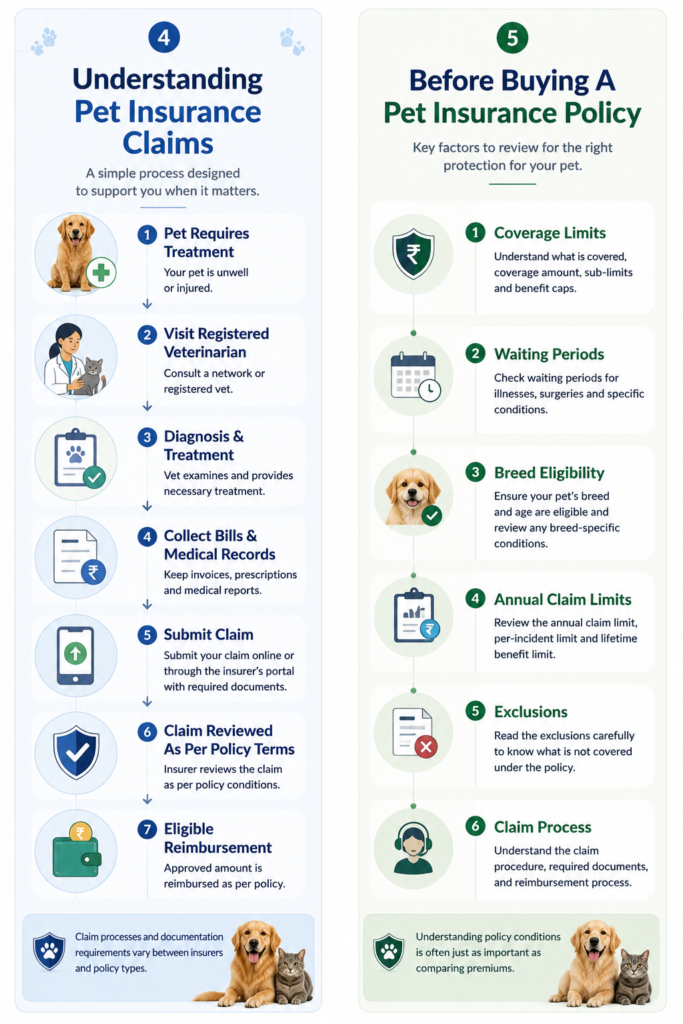
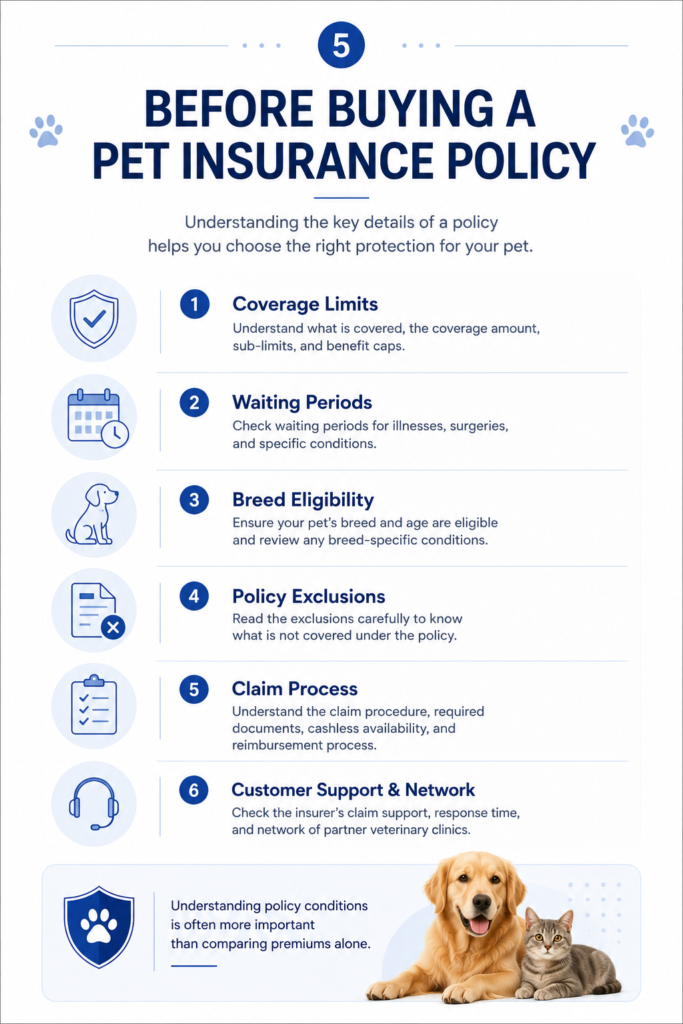
Every pet insurance policy includes exclusions and coverage limitations. Reviewing these before purchasing can help set realistic expectations and reduce the likelihood of claim surprises.
Pre-Existing Conditions
Medical conditions diagnosed before the policy starts are commonly excluded from coverage or may be subject to specific policy terms.
Routine Grooming
Grooming services, nail trimming, bathing, and routine hygiene care are generally not included under standard pet insurance plans.
Cosmetic Procedures
Elective or cosmetic procedures that are not medically necessary are typically excluded from insurance coverage.
Non-Medical Expenses
Transportation, boarding, food, accessories, and other non-medical costs are usually outside the scope of pet insurance.
Certain Breed-Specific Conditions
Some insurers may apply exclusions, waiting periods, or special underwriting requirements for hereditary or breed-related medical conditions depending on the policy.
Speak With a Human Advisor
✓ Rated 5.0/5 on Google Reviews
✓ Clear Guidance Without Pressure
✓ Dedicated Claim Assistance
✓ Support Before and After Policy Purchase
✓ Personalized Recommendations Based on Your Needs
✓ 100% Free Consultation
Have questions? Book a callback or chat with an advisor on WhatsApp. We’re here whenever you need assistance.
UNC Advisor Insight
The biggest mistake pet owners make is assuming all veterinary expenses are covered. Coverage limits, exclusions, waiting periods, and breed-related restrictions deserve careful review.
Frequently
Asked
Questions

Customer Reviews
I had a very smooth experience. Everything was explained clearly and patiently, which made it much easier to understand my options. I appreciated the transparency and the fact that there was never any pressure during the process.
What stood out the most was the responsiveness and professionalism. Every question was answered in a simple manner, and the entire experience felt trustworthy from start to finish.
I was looking for guidance rather than a sales pitch, and that is exactly what I received. The explanations were easy to understand and helped me make a more informed decision.
Great service and clear communication. Everything was explained in a practical way, and I always felt supported whenever I needed assistance.