
Financial Protection
When Life Takes An Unexpected Turn
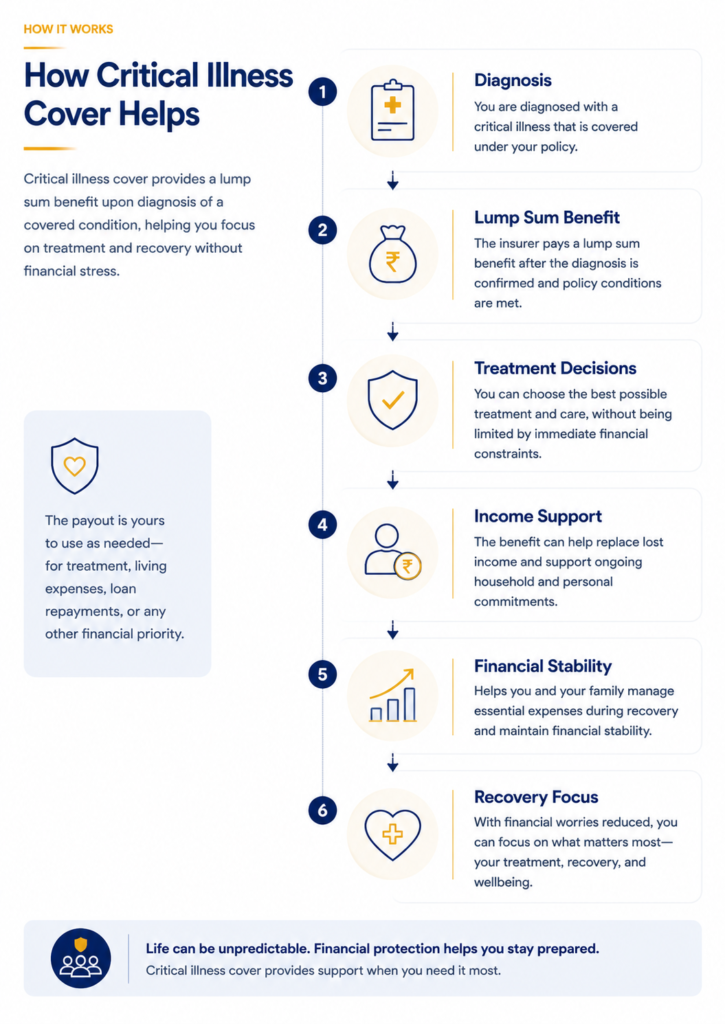
Critical illness cover provides a lump-sum benefit upon diagnosis of specified serious illnesses, helping individuals and families manage income disruption, ongoing expenses, and recovery costs.
Unlike regular health insurance, which primarily reimburses eligible hospitalisation expenses, critical illness cover is designed to provide financial support after the diagnosis of specified serious medical conditions.
The payout can be used for medical treatment, household expenses, loan repayments, lifestyle adjustments, or any other financial priorities during recovery.
UNC Recommended Solutions
Common ways individuals choose to add critical illness protection to their financial plan.
✓ Broad List of Covered Illnesses
✓ Independent Financial Protection
✓ Flexible Use of Claim Amount
✓ Added To Existing Life Cover
✓ Simplified Policy Management
✓ Financial Support On Diagnosis
✓ Group Coverage
✓ Workplace Financial Protection
✓ Convenient Enrolment
Who Should Consider Critical Illness Cover?
A serious illness can affect more than your health—it may interrupt your income, increase household expenses, and impact long-term financial plans. Critical illness cover is often considered by individuals with ongoing financial responsibilities or dependents.
Families With Financial Dependents
Parents and caregivers supporting children or dependent family members may benefit from additional financial protection during extended recovery periods.
Sole Income Earners
Individuals whose income supports the household often seek protection that can help manage financial commitments if they are unable to work.
Self-Employed Professionals
Business owners, consultants, and freelancers may not receive employer-sponsored benefits, making personal protection especially important.
Individuals With Home Loans
Ongoing loan repayments and household expenses can continue even during medical recovery, increasing financial pressure.
Business Owners
Entrepreneurs often have both personal and business financial responsibilities that may continue during periods of reduced income.
Individuals Planning Long-Term Financial Security
Those seeking an additional financial safety net alongside health and life insurance may consider critical illness protection as part of a broader financial plan.
Insurance made simple. Expert advice, tailored to your needs.
Book a free consultation or chat on WhatsApp with a UNC Insurance advisor.
Speak With a Human Advisor
✓ Rated 5.0/5 on Google Reviews
✓ Clear Guidance Without Pressure
✓ Dedicated Claim Assistance
✓ Support Before and After Policy Purchase
✓ Personalized Recommendations Based on Your Needs
✓ 100% Free Consultation
Have questions? Book a callback or chat with an advisor on WhatsApp. We’re here whenever you need assistance.
Typical Premium Range
The premium for critical illness cover depends on factors such as your age, health profile, occupation, coverage amount, and policy features. The figures below are illustrative estimates for a healthy 30-year-old individual.
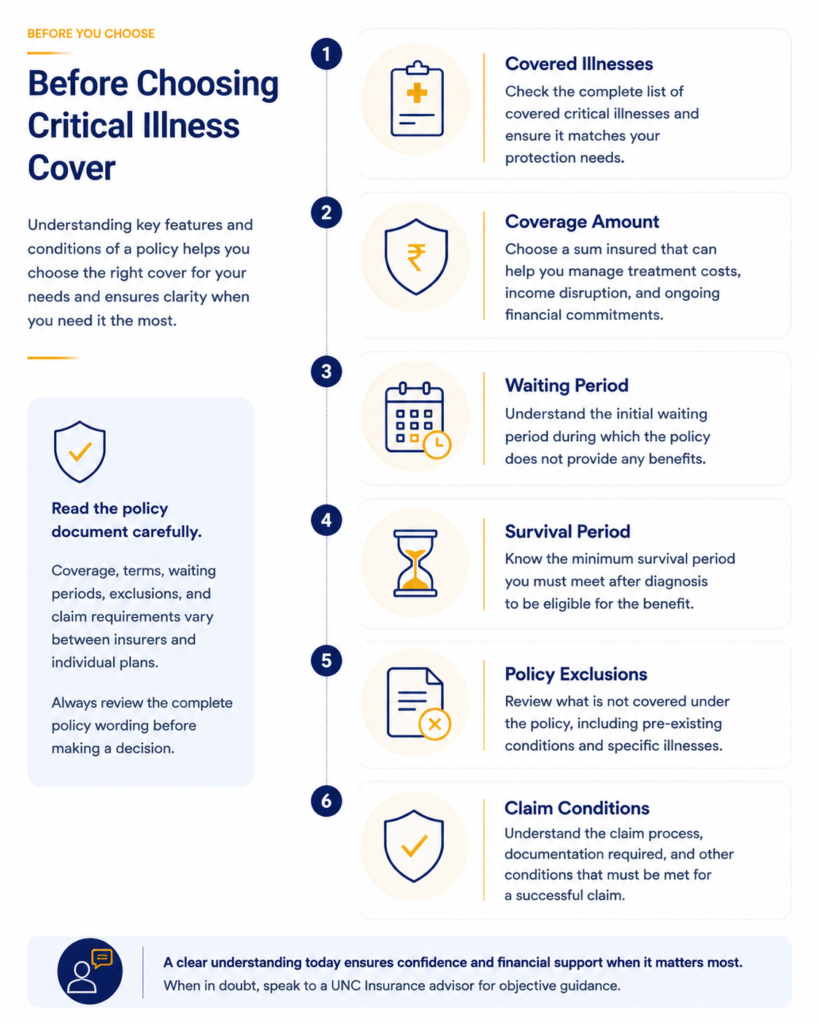
What To Look For
Covered Conditions
Review the list of illnesses covered under the policy.
Waiting Period
Most plans require a waiting period before benefits become active.
Survival Period
Some policies require survival for a specified period after diagnosis before benefits become payable.
Coverage Amount
The benefit should reflect both treatment costs and potential income disruption.
Standalone vs Rider
Evaluate whether standalone coverage or a rider better suits your needs.
UNC Advisor Insight
Many people assume critical illness cover replaces health insurance. In reality, the two serve different purposes. Health insurance helps cover medical expenses, while critical illness cover is designed to provide financial flexibility during recovery and income disruption.
Frequently
Asked
Questions

Customer Reviews
I had a very smooth experience. Everything was explained clearly and patiently, which made it much easier to understand my options. I appreciated the transparency and the fact that there was never any pressure during the process.
What stood out the most was the responsiveness and professionalism. Every question was answered in a simple manner, and the entire experience felt trustworthy from start to finish.
I was looking for guidance rather than a sales pitch, and that is exactly what I received. The explanations were easy to understand and helped me make a more informed decision.
Great service and clear communication. Everything was explained in a practical way, and I always felt supported whenever I needed assistance.